Tires lose a little air naturally every month, and more in cold weather. Under-inflated tires wear unevenly and make the car feel less precise; over-inflated ones reduce grip.
Step by step
Find the right number
Look on the sticker inside the driver’s door frame or in your owner’s manual. Do not use the maximum number printed on the tire sidewall.
Check when cold
Measure before driving or after the car has been parked for at least three hours. Warm tires read higher.
Measure each tire
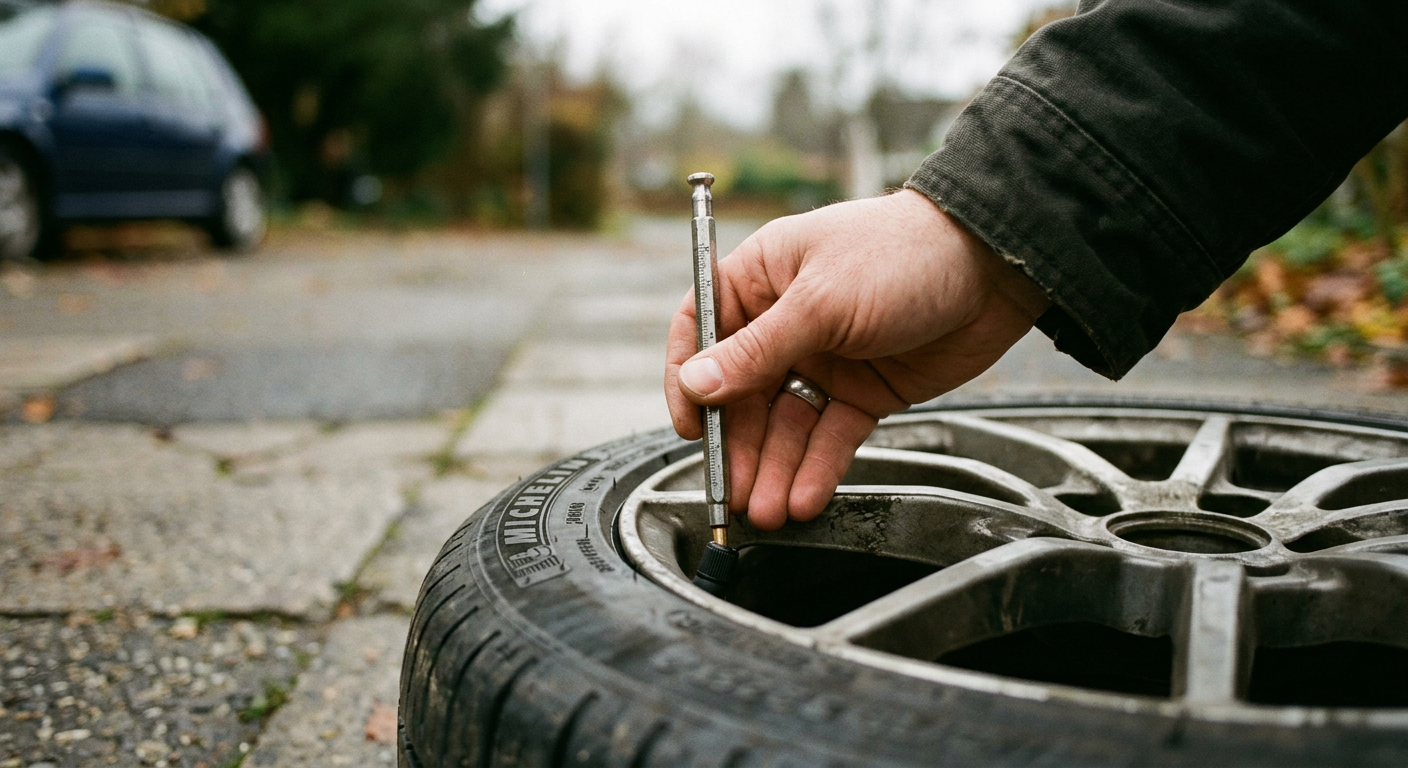
Remove the valve cap, press the gauge on firmly until the hissing stops, and read the number.
Adjust and recheck
Add air in short bursts, checking as you go. Replace the valve caps when finished.
How often
Once a month and before any long trip. Many cars have a warning light for low pressure, but it usually only triggers once a tire is well below the recommended level.
This guide is general information, not professional advice. Always follow your manufacturer's instructions and local regulations. See our Disclaimer.